


Standard conveyor platforms cover a wide range of applications. When a handling requirement pushes past those boundaries (unusual load characteristics, tight part control, a layout that makes a standard frame impractical), the platform has to adapt to the application, not the other way around.
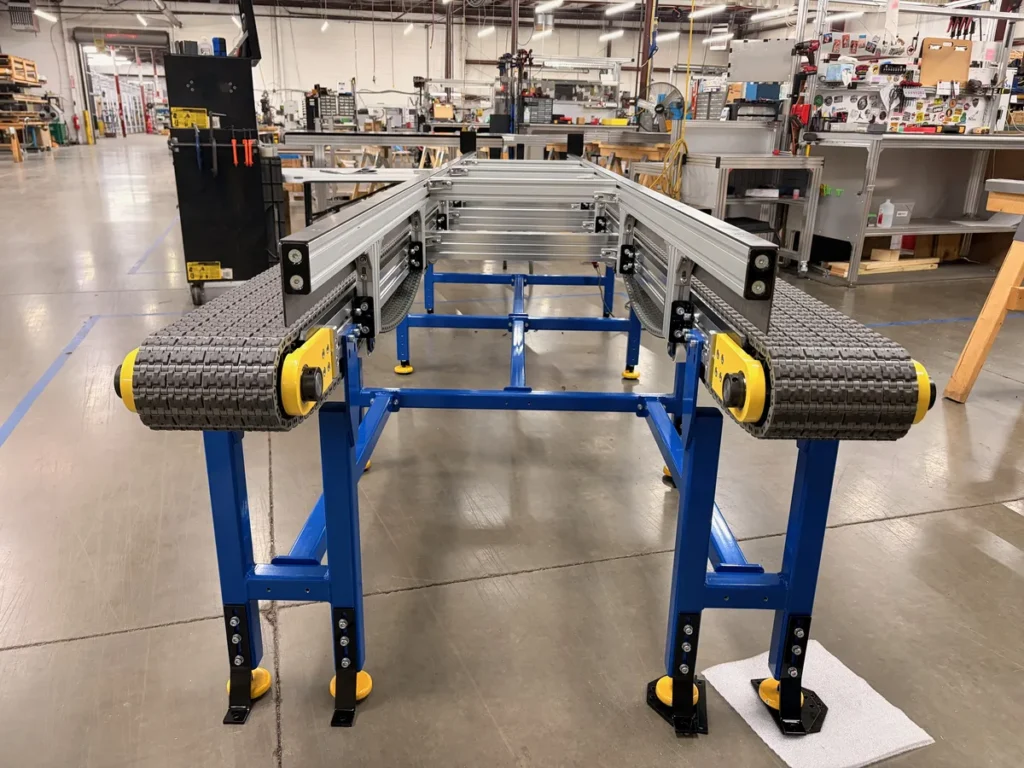
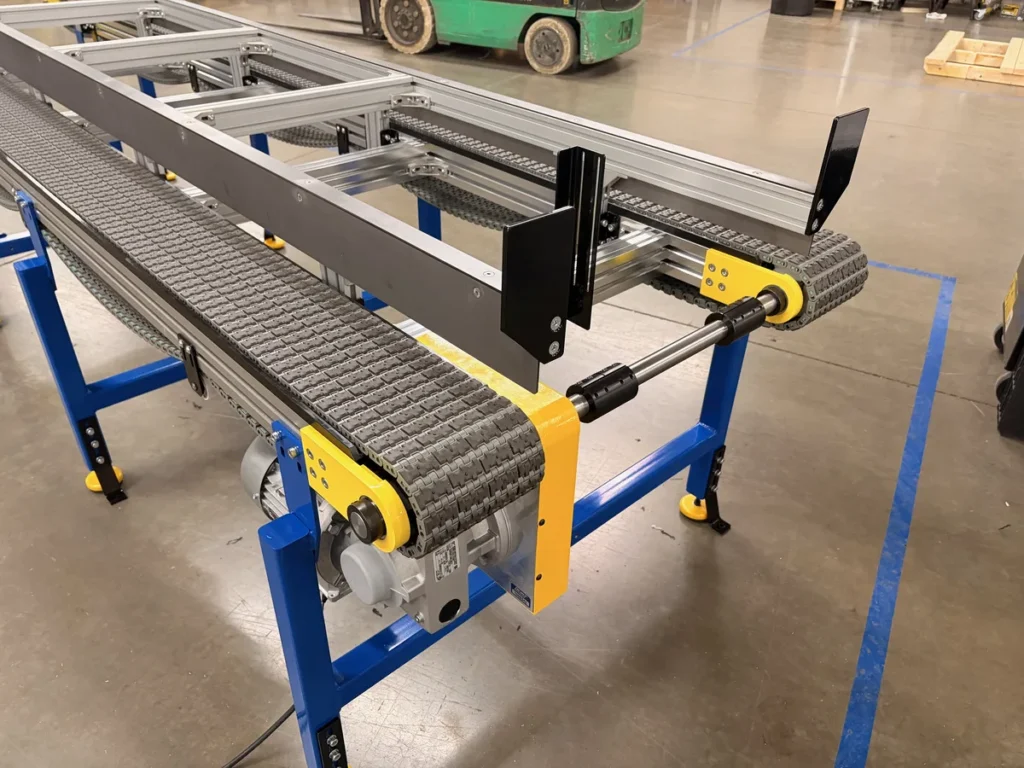
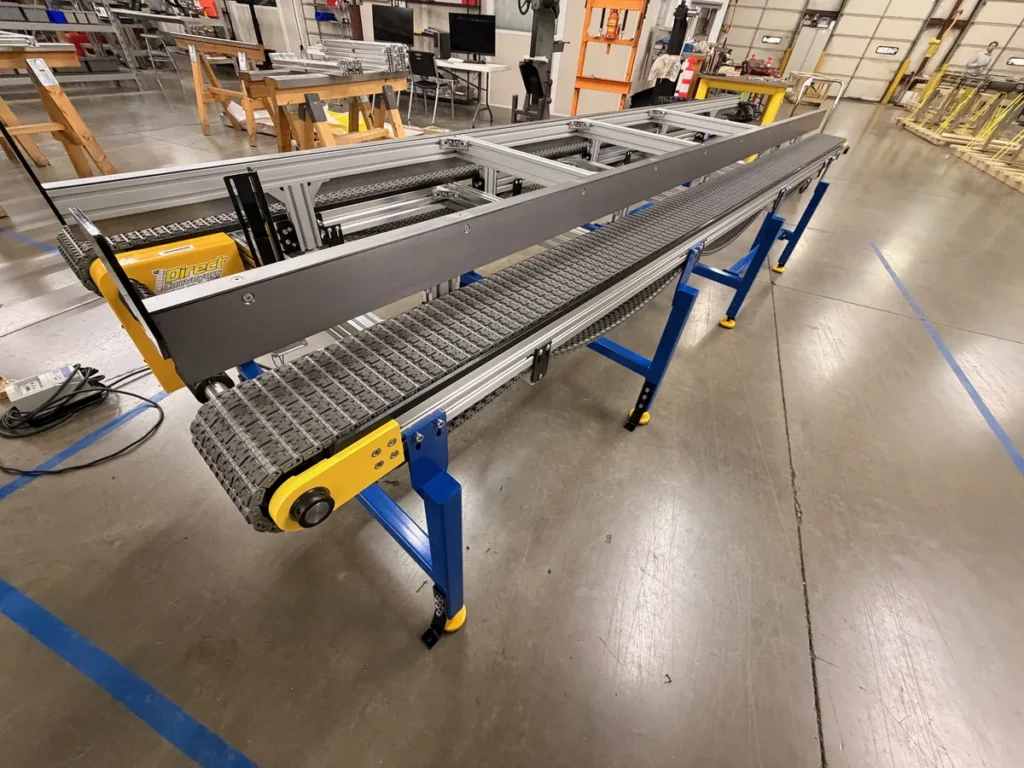
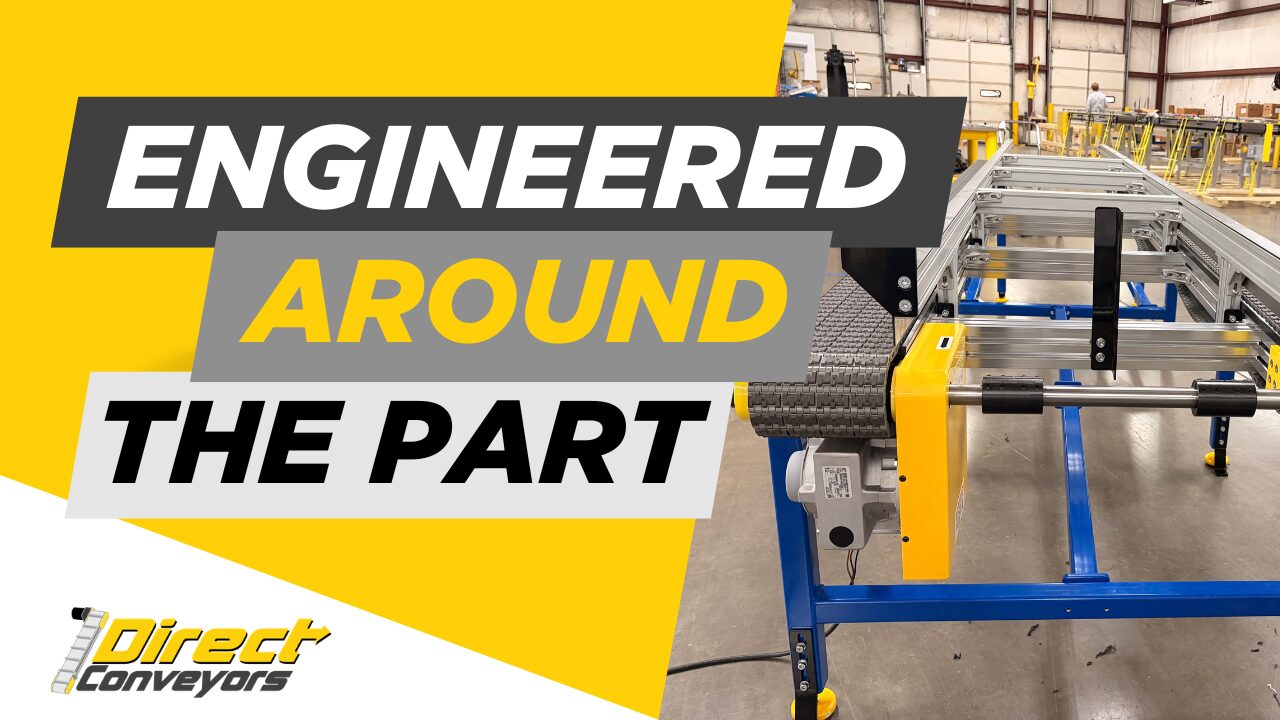
This dual lane modular plastic belt conveyor is a good example of what that looks like in practice.
What this conveyor for heavy parts required
The part handling requirement on this project called for four things at once: durability, traction, control, and structural rigidity. That combination shaped every decision.
The configuration came out to:
- Heavy duty side rails
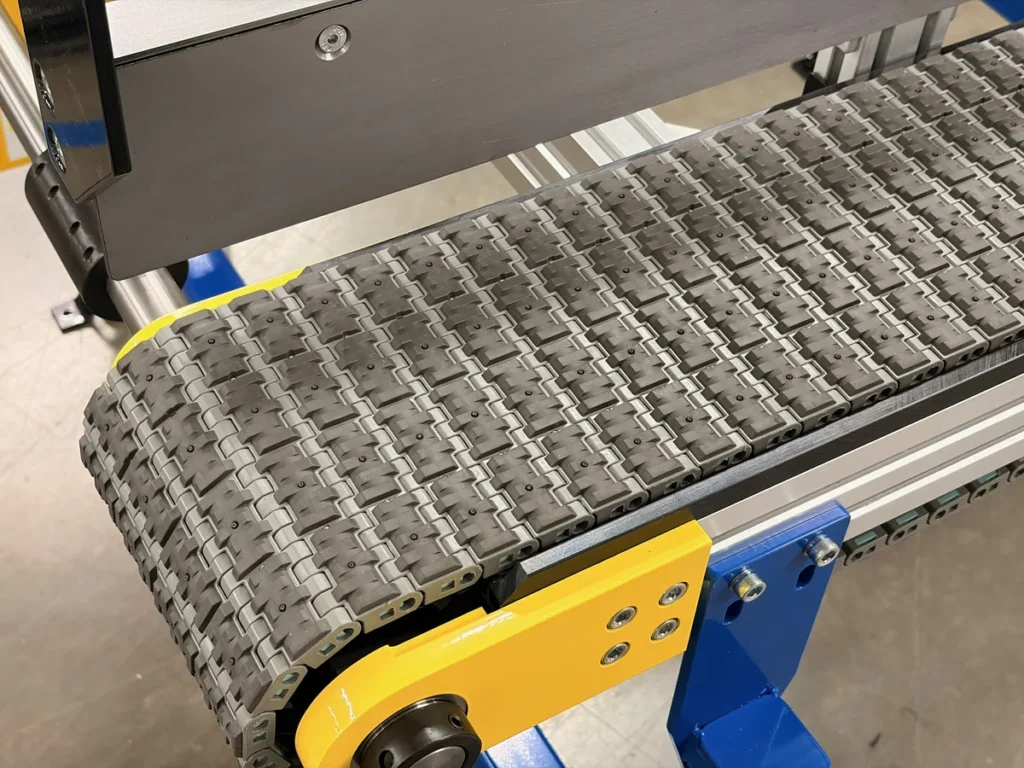
- High friction belting
- Tubular steel leg construction
- Custom structural configuration and paint
None of those features were added for appearance. Each one addressed a specific condition in the operating environment.
Why modular plastic belt
Modular plastic belt is well suited for applications where traction and part control are non-negotiable. The surface grips parts that flat belt would let wander or tip. The modular construction also holds up where debris, part geometry, or operating conditions would degrade flat belt faster.
The dual lane configuration let two parallel product streams run on a single structure, which reduced floor space without cutting throughput. That was part of the original requirement.
How the engineering actually starts
A common mistake in conveyor selection is picking a platform first and then figuring out how the process fits around it. When it works, it works. When it doesn’t, you end up with a conveyor that technically handles the part but fights the process at every step.
At Direct Conveyors, the application drives the specification. Before any configuration decision, the questions are: What does the part look like? How does it need to be controlled during transport? What’s the floor footprint? What does the operating environment actually look like in production?
Those answers shape the conveyor.
Have a heavy or bulky part that needs to move safely?
If your part is awkward to handle, oversized, or needs to stay under control through every foot of travel, that’s exactly the kind of application we engineer around. Describe what you’re moving and we’ll tell you what fits.
If your application is more straightforward, the Direct Conveyors Configurator is a good place to start. Build out a standard conveyor to your dimensions and requirements, and we can take it from there if customization is needed.